




Periodontal Disease
Periodontal disease, also known as gum disease, is an infection of the gums which can gradually destroy the the bone that supports your natural teeth. There are numerous disease entities requiring different treatment approaches.
Dental plaque is the primary cause of gum disease in genetically susceptible individuals. Bacteria found in plaque produces toxins that irritate the gums, which may cause them to turn red, swell, and bleed. If this irritation is prolonged, the gums separate from the teeth, causing pockets to form. As periodontal disease progresses, the supporting gum tissue and bone that holds teeth in place deteriorates. If left untreated, tooth loss may be inevitable.
Other important factors affecting the health of your gums include:
- Smoking
- Diabetes
- Stress
- Clenching and grinding teeth
- Medication
- Poor nutrition
HOW IS PERIODONTAL DISEASE DIAGNOSED?
Periodontal disease is diagnosed by a number of factors. An examination in which the visual condition of the gums, the amount of calculus present, the depth of the pockets around each tooth, and x-rays are all considered to make a diagnosis. After a diagnosis of periodontal disease, one of our hygienists will perform scaling and root planing.
How is periodontal disease treated?
The initial stage of treatment for periodontal disease through periodontal scaling and root planing, also known as a deep cleaning. The objective of these non-surgical procedure is to remove etiologic agents such as dental plaque and calculus, which cause gingival inflammation and disease.
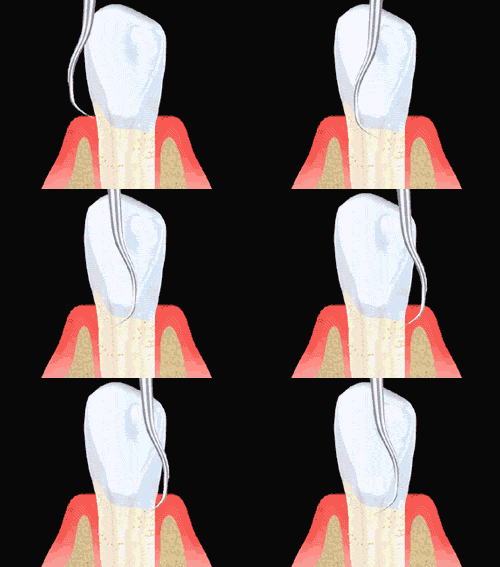
When scaling and root planing is performed, calculus and plaque that attaches to the tooth surfaces is removed. The process especially targets the area below the gum line, along the root. Scaling is performed with a special dental tool called an ultrasonic scaling tool. The scaling tool usually includes an irrigation process that can be used to deliver an antimicrobial agent below the gums to help reduce oral bacteria.
Antibiotics or irrigation with anti-microbials (chemical agents or mouth rinses) may be recommended to help control the growth of bacteria that create toxins and cause periodontitis. In some cases, our hygienies may place antibiotic fibers in the periodontal pockets after scaling and planing. This may be done to control infection and to encourage normal healing.
When deep pockets between teeth and gums are present, it is difficult for our hygienies to thoroughly remove plaque and tartar. Patients can seldom keep these pockets clean and free of plaque with at-home care. Consequently, surgery may be needed to restore periodontal health.
Benefits of Treatment
If treatment is successful, scaling and planing may have many periodontal benefits. Research has proven that bacteria from periodontal infections can travel through the blood stream and affect other areas of the body, sometimes causing heart and respiratory diseases. Scaling and root planing remove bacteria that cause these conditions.
Another benefit of treatment is protecting teeth against tooth loss. When gum pockets exceed 3mm in depth, the risk for periodontal disease increases. As pockets deepen, more bacteria are able to colonize, eventually causing a chronic inflammatory response by the body to destroy gingival and bone tissue, leading to tooth loss.
Finally, scaling and root planing may make the mouth more aesthetically pleasing, and should reduce bad breath caused from food particles and bacteria in the oral cavity. Superficial stains on the teeth will be removed during scaling and planing, adding an extra bonus to the procedures.